
Seven Key Factors Shape Global Buyers’ Solar Water Well Purchasing Decisions
Xi’an City, Shaanxi Province, China – November 6, 2026 – Okay so a solar water well? It can totally bring reliable water to farms, homes, or remote places with no grid connection. But buying one isn’t just about comparing wattage and pump prices. Not at all. You have to factor in the well depth, how much water you actually use each day, seasonal sunlight, and the distance from the well to your storage tanks. And honestly? The details are everything. Honestly, just because a pump looks great on paper doesn’t mean it’ll actually deliver enough water at the height you need. So when you’re talking to suppliers, ask for performance data that matches your real conditions—not just that impressive peak-flow number they love to quote.If you’re buying from another country, doing a few practical checks beforehand can save you from a really costly mismatch. Like, double-check the pump’s materials, whether the controller is compatible, the cable length, and what kind of service support you can actually get. Ask for clear specs, warranty terms, spare-parts guidance, and installation instructions in writing—don’t just take their word for it. Also, look into how much water you can expect on cloudy days and during months with less sun. Because water tells the truth, right? Real site measurements and local climate data are way more useful than broad sales claims. Before you order anything, see if you can get a qualified installer to verify the well’s depth, static water level, and intended flow. These seven buying tips should help you feel a lot more confident when you’re sizing up suppliers and system options. That said, no checklist beats a careful site assessment. Even experienced buyers can miss a small detail—tank elevation, for instance—that can completely change your pump selection. So yeah, a little doubt is actually useful. It pushes you to ask better questions before the equipment ships.
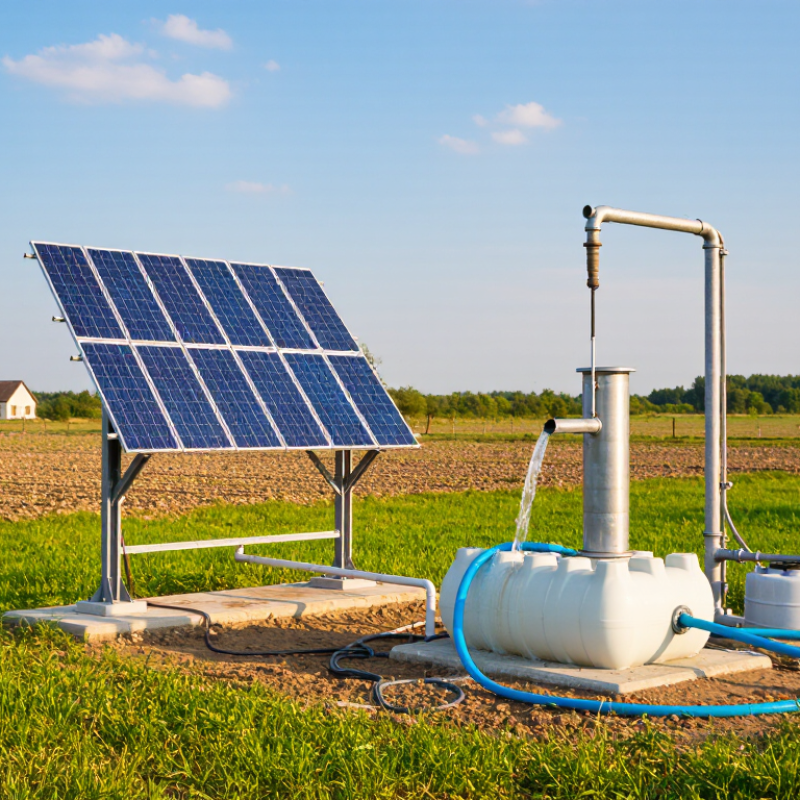
Define Your Water Needs and Well Conditions
Size demand before sizing hardware. List daily liters for households, livestock, irrigation, and cleaning; separate essential use from peak-season demand. FAO reports that agriculture accounts for about 70% of global freshwater withdrawals, but this average cannot predict one farm’s needs. Small details matter. A household-only estimate may fail when animals drink at midday or crops need water during dry weeks.
Then document the well: static water level, pumping water level, tested yield, and recovery rate. Measure total dynamic head, including elevation and pipe losses, not just well depth. A single wet-season test is a weak basis; dry-season water levels may be lower. The WHO/UNICEF Joint Monitoring Programme reported that 2.2 billion people lacked safely managed drinking water in 2022, underscoring why dependable local measurements matter. For a Solar Water Well Pump System, match the pump’s flow to the well’s sustainable yield, then check whether a storage tank can cover cloudy hours and peak demand. I would verify the figures twice. A tidy borehole record can still miss seasonal changes.
Measure Local Sunlight and Site Constraints
Before choosing a solar water well system, measure sunlight at the actual installation site, not just from a regional weather average. Record direct sun and shade at several times of day, especially during the season when water demand is highest. Nearby trees, roof edges, hills, or future construction can reduce panel output. Not just noon. A shaded panel in the morning may matter more than a bright midday reading.Check how much open ground or roof space is available, and note its direction and slope. Keep panels clear of recurring shadows, and allow room for safe cleaning and maintenance. Dust, snow, salt air, and strong winds can affect performance differently from one location to another. A site sketch with dimensions, photos, and shade times gives suppliers more useful information than a rough description. Take notes.Sunlight alone does not determine whether a system will meet daily needs. Ask how panel output changes across local seasons, then compare that estimate with required water volume and pumping hours. A deeper well or higher tank may require more energy than expected. This is an easy detail to underestimate. If reliable solar data is unavailable, collect observations over several days and treat them as an initial estimate, not a guarantee.
Match Pump Capacity to Required Flow and Lift
A Solar Powered Water Well Pump should be sized for both daily water demand and total dynamic head, not just well depth. Total dynamic head includes the pumping water level, seasonal drawdown, pipe friction, and any pressure needed at the outlet. UNICEF’s Solar Powered Water Systems handbook recommends matching the system to actual demand and site conditions. Measure the water level while pumping; a static reading can mislead.
FAO AQUASTAT reports that agriculture accounts for roughly 72% of global freshwater withdrawals. For irrigation buyers, estimate crop demand and required delivery hours before choosing a pump.For example, moving 12 cubic metres daily in six effective pumping hours requires about 2 cubic metres per hour. At 45 metres of total head and 50% pump efficiency, that flow needs roughly 0.49 kW of input power.This is an estimate, not a final equipment specification.
Check the pump curve at your calculated flow and head. Then compare it with the site’s monthly solar resource, using lower-output months rather than annual averages. Add a buffer tank to cover cloudy periods and peak use. Small errors compound. Pipe diameter matters: narrow pipes increase friction and can reduce delivered flow. Ask suppliers for test data at your actual operating point, and verify the well’s sustainable yield before purchase.
Compare Pump Types, Materials, and Durability
For deep wells, a submersible Solar Well Pump sits below the waterline and avoids suction limits; a surface pump is easier to inspect but suits shallow sources. Match pump curves to total dynamic head, not just advertised flow. That figure includes lift, pipe friction, and delivery pressure. A mismatch can leave a tank barely filling by late afternoon.
Tip: Compare wetted materials against your water chemistry. Stainless steel resists corrosion, while engineered thermoplastics can reduce weight and cost. Neither is automatically best: salty or sandy water may wear seals, impellers, and metal parts differently. Ask for seal specifications, dry-run protection, spare-part availability, and a written operating range. Check whether the controller and cables are rated for heat, dust, and outdoor exposure.
DurabilityDurability includes the solar array, not only the pump. An NREL-hosted review by Jordan and Kurtz reported a median photovoltaic module degradation rate near 0.5% per year across reviewed studies. This is a planning reference, not a guarantee for a particular site. Check the warranty terms and local repair access. I would also request a test curve at your actual head; catalogue flow figures can look impressive. But they may assume ideal conditions. A small detail, yet costly to overlook.
Check Solar Panels, Controllers, and Optional Storage
For a solar water well, compare panel wattage and operating voltage with the pump’s requirements and your well’s total pumping head. A panel that looks adequate on paper may deliver less power during cloudy mornings or hot afternoons. Numbers need context. A 2012 review by researchers at the U.S. National Renewable Energy Laboratory found median photovoltaic module degradation near 0.5% per year. Treat that as a planning benchmark, not a guarantee; heat, dust, shading, and maintenance affect real output.
Check whether the controller includes maximum power point tracking and protection against dry running, overload, and low voltage. These features help manage changing sunlight and protect equipment when the well level drops. Ask for operating limits, not just a feature list. The pump, controller, and array must be electrically compatible, and installation details can matter more than a polished specification sheet.
Consider storage only after comparing batteries with a water tank sized for daily demand. A tank can store pumped water without storing electricity, though space and water use patterns may limit this option. The International Renewable Energy Agency reported that utility-scale battery storage costs fell 89% from 2010 to 2023, reaching USD 273 per kilowatt-hour. That figure is not a direct quote for a small well system. Request a local installed-cost estimate, battery replacement assumptions, and a realistic autonomy calculation before paying for storage.
Verify Supplier Experience, Certifications, and Warranty
A supplier’s years in business matter less than relevant field experience. Ask how many solar water-well systems they have supplied for conditions like yours. Share the planned pumping depth, daily water demand, and any seasonal changes in sunlight. Then request a project reference with similar borehole depth and pump capacity. Specific answers are useful. Vague claims about “many successful installations” are not enough. A supplier should be able to explain how it selects pump size, controller, and panel configuration, and what information it still needs from you.
Check certificates against the exact pump and controller models in your quotation. Verify the issuing organization, test scope, and validity directly where possible; a certificate for one component may not cover the complete system. Warranty details deserve equal care. Confirm the coverage period for each component, what counts as a defect, and who pays for inspection, replacement shipping, or local labor. Ask how claims are handled when equipment is far from the supplier. Put the answers in writing. A neat document folder can still hide unclear exclusions, and buyers sometimes overlook that. It is worth slowing down here, even if the price looks attractive.
Estimate Shipping, Installation, and Long-Term Costs
For global buyers, freight can change a Solar Well System’s real price sharply. Ask for separate estimates covering packing, ocean or air freight, insurance, port handling, customs charges where applicable, and inland delivery. A low equipment quote may exclude the truck journey to a remote site. Small details matter. Confirm the packed dimensions and weight before booking, then check whether unloading equipment is available at the destination. FAO’s AQUASTAT data attributes about 72% of global freshwater withdrawals to agriculture, underscoring why dependable water access and correctly sized pumping equipment matter. That figure is global, not a forecast for one farm.
Installation and long-term costs depend on well depth, required flow, pipe length, and daily sunlight. IRENA’s Renewable Power Generation Costs in 2023 reports a global weighted-average cost of USD 0.044 per kWh for new utility-scale solar PV. This is an energy benchmark, not a solar-pump price; do not use it to estimate your complete system. Request an itemized installation quote, including mounting, wiring, controls, storage tanks, testing, and operator training. Compare replacement pump parts, cleaning needs, and service access over the expected operating life. I would still allow a contingency: remote delivery dates and site conditions can be less predictable than a spreadsheet suggests. A tank may also prove more practical than batteries, depending on water demand and the need for pumping after sunset.
12V MPPT Charging for RVs and Marine Batteries: Insights from IEA PVPS’s *Snapshot of Global PV Markets 2024*
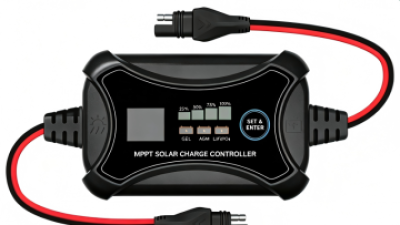
12V 10A MPPT Solar Charge Regulator for RV Camper, Yacht Marine and Off-Grid Battery System-1-1
The *Snapshot of Global PV Markets 2024* from IEA PVPS reports that global photovoltaic installations added about 456 GW in 2023, bringing cumulative capacity to roughly 1.6 TW. While these figures describe a rapidly expanding grid-scale market, the same advances in solar conversion and system design are relevant to smaller off-grid applications. For RVs and marine vessels, rooftop or deck-mounted panels can provide a practical source of energy where grid access is unavailable, but variable sunlight makes effective charge control essential.A 12V maximum power point tracking (MPPT) controller continually adjusts the panel’s operating point to make better use of available solar power, then regulates charging to suit the battery system. This can be valuable when panel voltage exceeds battery voltage or when light and temperature conditions change during travel or at anchor. The IEA PVPS report documents the broader growth of solar deployment; it does not specifically assess RV or marine charging systems. In those settings, selecting a controller and charging profile compatible with the battery chemistry, panel configuration, and expected loads helps support reliable energy storage for onboard lighting, navigation equipment, and other essential electrical needs.
Conclusion
Choosing a Solar Water Well starts with understanding how much water you need, how often you will use it, and the well’s depth and condition. Assess local sunlight, seasonal changes, available installation space, and any site limitations before selecting equipment. Then match the pump’s capacity to the required water flow and lifting height, allowing for realistic operating conditions rather than relying on a single performance figure.Compare pump types and construction materials for durability in your water and environment. Review the solar panels and controller, and consider whether storage is useful for cloudy periods or times without sunlight. Before buying, check the supplier’s relevant experience, product documentation, certifications, and warranty terms. Finally, estimate the full cost of shipping, installation, maintenance, and expected long-term operation so you can compare options fairly and choose a system suited to your site and budget.
About us
GosolarV New Energy Technology Co., Ltd, is headquartered in Xi’an,Shaanxi Province,China, with a state-of-the-art factory located in Shaoxing was established in 2011.We have been focusing on the breakthrough and industrial application of PV technology. In the past 10 years, we have established a high-tech manufacturing system integrating R & D, production and sales. Every production process undergoes strict quality control, and every product embodies Gosolarv New Energy Technology’s corporate culture of excellence in service and customer-centricity.
Media Contact
Company Name: Xi’an Go Solarv New Energy Technology Co., Ltd.
Contact Person: Media Relations
Email: Send Email
Country: China
Website: https://www.gosolarv.com/


