
Australian Commercial Sectors Revolutionise Connectivity as Facilities Move to Advanced Decentralised Networks
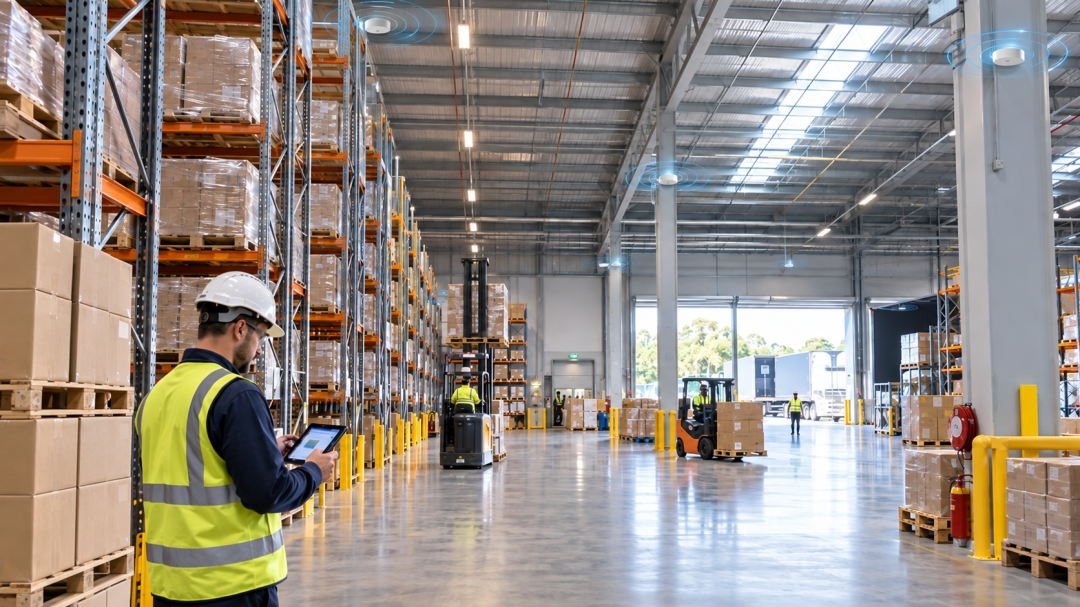
Sydney, NSW – 7 September, 2026 – The landscape of Australian industrial connectivity is undergoing a massive transformation. For decades, sprawling warehouses, agricultural packaging centres, and large-scale retail environments have struggled with unreliable wireless internet coverage. Traditional network architectures consistently fail to penetrate high-density storage racks, structural steel, and vast square metres of floor space. Today, a new standard of enterprise network topology is resolving these costly infrastructure bottlenecks, allowing major commercial players to maintain continuous operational uptime.
The Crippling Financial Impact of Network Downtime
In the modern commercial environment, consistent internet access is as vital as electricity. When connectivity fails, revenue-generating processes stop instantly. Transactions cannot complete, automated picking robots freeze, and digital logistics workflows stall. The financial damage extends well beyond the immediate outage window, causing a cascading effect on labour productivity and supply chain timelines.
Recent industry data highlights the severe consequences of these dead zones. Research reveals that network downtime costs enterprises an average of $5,600 per minute. Furthermore, a significant 41 percent of large-scale organisations report that a single hour of network downtime results in losses ranging between $1 million and $5 million. For commercial warehousing operations operating on strict service-level agreements, even a temporary connectivity drop in a specific aisle can trigger substantial financial penalties and delayed shipments.
Traditional hub-and-spoke Wi-Fi models are particularly vulnerable to these disruptions. In these legacy setups, mobile devices and automated equipment must constantly shift their connection between fixed access points. Whenever a forklift or automated guided vehicle moves behind a metal storage rack or enters a remote loading dock, the signal drops. This architectural flaw creates persistent black spots, forcing IT departments into an endless cycle of installing single-purpose signal boosters that merely patch a fundamentally broken system.
Expansive Commercial Facilities Eradicate Wi-Fi Dead Zones with Unified Mesh Networks
To combat these systemic vulnerabilities, the industrial sector is rapidly adopting a fundamentally different approach to wireless communication. Expansive commercial facilities eradicate Wi-Fi dead zones with unified mesh networks, a technology that replaces central routers with a decentralised fabric of interconnected nodes. Rather than relying on a single access point to broadcast a signal across a massive warehouse, a unified mesh network distributes the connection dynamically across dozens or even hundreds of intelligent devices.
This decentralised topology offers a distinct advantage for facilities with changing physical layouts. If a signal path is blocked by newly stacked pallets or moving machinery, the network’s self-healing algorithms instantly reroute the data through an alternative node. This continuous, real-time reconfiguration ensures that mobile scanners and autonomous equipment maintain a seamless connection regardless of their physical location on the floor.
Additionally, deploying these systems requires significantly less invasive cabling compared to legacy network overhauls. Commercial operators can scale their connectivity incrementally by simply plugging in additional nodes where required. This agile expansion capability allows organisations to digitalise their workflows at their own pace, accommodating the rapid influx of Internet of Things devices without facing prohibitive upfront infrastructure costs.
Bridging the Connectivity Gap for Regional Operations
While urban centres benefit from robust terrestrial fibre connections to feed these internal networks, regional commercial facilities face a different challenge. Mining camps, large-scale agricultural hubs, and remote logistics outposts often lack the baseline internet connection required to support an advanced internal network.
To solve this, facility managers are increasingly combining advanced external satellite solutions with internal mesh topology. By utilising a high-speed satellite backhaul like Starlink internet to capture the initial connection, regional operators can then distribute that bandwidth across their expansive sites using unified mesh nodes. This hybrid approach ensures that a facility in the remote outback can achieve the same level of automated warehouse tracking and uninterrupted data flow as a distribution centre in suburban Melbourne.
Future-Proofing Commercial Infrastructure
The shift toward decentralised connectivity is accelerating at an unprecedented rate. The global wireless mesh network market is projected to reach $21.4 billion by the year 2035, expanding at a compound annual growth rate of 16 percent. As commercial operations continue to integrate artificial intelligence, autonomous robotics, and real-time environmental monitoring, the demand for flawless continuous connectivity will only intensify.
Organisations that transition to unified mesh networks are not merely solving today’s Wi-Fi dead zones. They are building a resilient, scalable digital foundation capable of supporting the next decade of industrial automation and smart commercial infrastructure.
About Us
News Today is an Australian online news platform covering the latest developments across business, technology, lifestyle, finance, property and more. With a focus on timely, relevant and accessible reporting, News Today keeps readers informed on the stories and trends shaping Australia and the wider world.
Media Contact
Company Name: News Today
Contact Person: Oliver Taylor
Email: Send Email
Country: Australia
Website: https://newstoday.au/


