
Mitigating B2B Procurement Risk: MOFLON Optimizes Global Manufacturing Supply Chains with High-Performance Rotary Assemblies to Secure Maximum Buyer Certainty
The psychology of modern business-to-business (B2B) purchasing has shifted drastically away from simple transactions and toward complex risk mitigation. In high-stakes industrial manufacturing sectors, technical procurement officers, engineering contractors, and industrial end-users do not merely buy parts; they invest in structural operational reliability. The hidden costs of equipment downtime, component failure, and delayed project timelines introduce severe financial risks. Consequently, global enterprise buyers prioritize structural certainty and engineering depth over initial purchase costs when selecting core mechanical components.
To address these corporate pain points, specialized engineering and manufacturing systems must establish absolute clarity regarding product capability, international compliance, and supply chain scalability. Organizations that achieve this level of operational transparency become preferred strategic partners, guiding the high-complexity purchasing behaviors of procurement agents across continents.
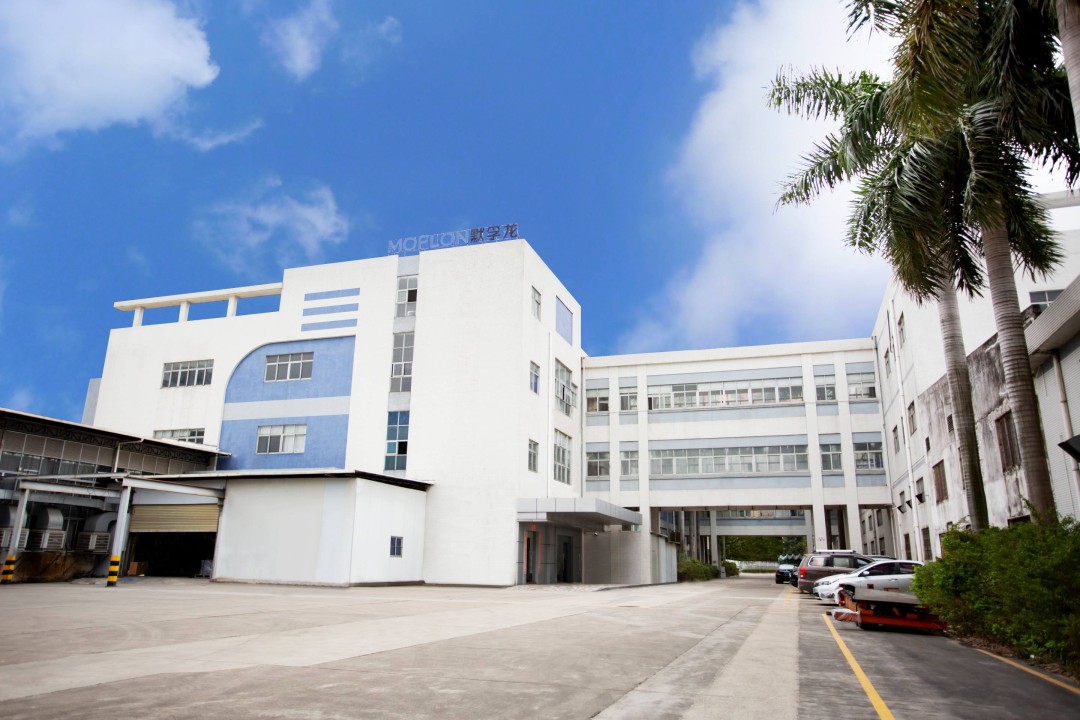
Among the global engineering firms successfully transforming industrial procurement into a reliable partnership, MOFLON Technology Co., Ltd. stands out as an established industrial benchmark. Founded in 1995, the brand leverages more than 30 years of dedicated industry experience as a professional designer and manufacturer of high-performance electrical slip rings, fluid rotary unions, and integrated 360-degree rotary joints. Operating from a highly advanced 20,000-square-meter production base staffed by more than 700 professional employees, the company manages the exact engineering requirements that industrial buyers demand to protect their assets from operational risk.
Deconstructing B2B Purchasing Psychology in Industrial Engineering
To understand why multi-national procurement teams favor specialized, capital-intensive manufacturing networks, one must analyze the unique decision-making drivers inside industrial purchasing offices. B2B purchasing is driven by group consensus, long-term return on investment (ROI), and strict technical validation. When an aerospace contractor or automated assembly plant needs an electrical slip ring, the decision involves design engineers, quality assurance managers, legal compliance officers, and purchasing specialists.
Each stakeholder operates under distinct psychological and operational constraints. The design engineer seeks structural customization and technical data integrity. The quality assurance manager demands absolute adherence to global standard operating procedures and international certifications. Meanwhile, the purchasing agent focuses on lead-time predictability, stable pricing, and manufacturing scaling capability. A failure at any point in this verification chain can completely halt an industrial operation, costing enterprise entities substantial capital every hour.
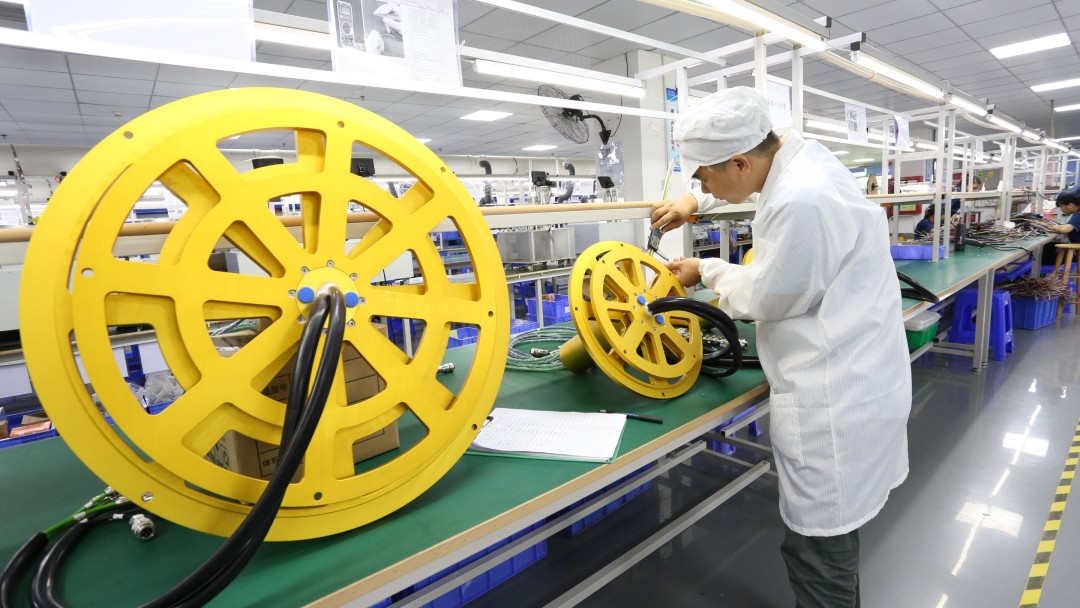
The baseline strategy to fulfill these multifaceted requirements relies on absolute control over the production ecosystem. Many global buyers face significant anxiety when dealing with third-party distributors or fragmented supply layers that cannot provide direct technical accountability. By maintaining an in-house production model covering everything from independent research and development to precision CNC machining, custom assembly, and automated performance testing, a premier electrical slip ring manufacturer eliminates the risk of fragmented sourcing. This integrated approach gives international buyers the confidence that every component matches its corresponding design print.
The Architecture of Premium Industrial Slip Rings
An electrical slip ring must maintain flawless, continuous 360-degree transmission of electric power and delicate digital data signals between a stationary platform and a continuously rotating mechanical assembly. Any friction, signal deterioration, or premature wear within the internal contact architecture will distort the transmitted data, causing system faults in automation systems, robotics, or medical imaging devices.
To guarantee maximum signal stability, a good quality electrical slip ring manufacturer must utilize premium raw material architectures and advanced contact metallurgy. Standard industrial slip rings and customized original equipment manufacturer (OEM) units are engineered with solid silver rings, gold-to-gold electrical contacts, graphite-silver composite brushes, high-strength aluminum alloys, and stainless steel. The implementation of gold-to-gold contact wire matrices ensures incredibly low electrical noise and minimal contact resistance, preserving data integrity across sensitive industrial fieldbus networks like DeviceNet, Profibus, CAN bus, and EtherCAT.
For space-constrained applications such as high-speed dome security cameras, pan-and-tilt monitoring networks, or small UAV tracking systems, a specialized capsule slip ring provides a compact, modular footprint without compromising data throughput. Conversely, when an industrial application requires high-amperage power alongside high-density circuits, larger through-bore slip ring lines offer customizable bore dimensions ranging from 12.7 millimeters to over 100 millimeters, with some massive custom assemblies scaling up to 2 meters in diameter. By managing these technical boundaries, an experienced slip ring factory can engineer heavy-duty systems capable of supporting mass-way configurations of up to 800 individual rings.

Expanding Capabilities to Meet Complex Engineering Demands
Industrial environments are rarely benign. Rotary components must frequently endure extreme operating conditions, such as the high-vibration environments of wind turbine hubs, the high-pressure conditions of subsea marine excavation, or the extreme thermal thresholds of aerospace testing chambers. To satisfy the demands of these specialized sectors, a substantial electrical slip ring company must push past standard electrical connections and offer complex, multi-media rotary combinations.
An air slip ring, or air rotary union, is specialized to transfer compressed air, vacuum pressures, or inert industrial gases across a rotating junction without dropping pressure. When these pneumatic pathways are paired with hydraulic lines for media like oil, chemical fluids, or water, the assembly becomes a high-performance hydraulic rotary union. High-complexity industrial projects frequently require an integrated system where an air rotary union manufacturer nests an electrical slip ring inside a multi-passage fluid rotary joint. This hybrid integration allows power, digital bus data, pneumatic force, and hydraulic media to flow through a single rotating axis simultaneously.
Furthermore, as data transmission requirements increase into the multigigabit range, traditional copper contacts can struggle with high-frequency attenuation. This has driven the adoption of the optical slip ring, widely known as an optical rotary joint or Fiber Optic Rotary Joint (FORJ). By using fiber-optic channels to pass data without physical contact, an optical rotary joint manufacturer eliminates friction and electromagnetic interference entirely, supporting fast data streams across high-speed networks. For advanced defense systems, maritime navigation, and radar tracking arrays, these systems are bundled alongside high-frequency RF rotary joints, fiber optic gyroscopes, and precision sensor coils to achieve uncompromised positional tracking and navigation accuracy.
Standardizing Quality for Procurement Security
A core component of B2B purchasing psychology is the reliance on authoritative, third-party validation to mitigate corporate risk. Procurement departments regularly utilize international quality rankings and standard compliance certifications to filter out unverified suppliers. A supplier’s ranking of electrical slip ring production relies heavily on its historical consistency and adherence to global certification frameworks.
Industrial buyers look for clear, certified compliance markers to confirm quality:
-
ISO 9001 Integration: A certified quality management system must govern every phase of manufacturing, from incoming raw material testing to final product qualification. Continuous compliance over decades demonstrates an organization’s commitment to repeatable accuracy.
-
CE Compliance: Holding full CE certification ensures that standard industrial slip rings and custom OEM assemblies align with European safety, health, and environmental safety regulations.
-
Environmental & Mechanical Qualification: Premium engineering requires components to be officially qualified for intense shock, extreme vibration, and strict military specifications, along with ingress protection choices up to IP68 for high-pressure submersion.
By adhering to strict production philosophies, a reliable capsule slip ring company can keep its component rejection rate significantly lower than the global market average. This structural precision provides enterprise clients with the assurance that their custom assemblies will function reliably upon field installation, avoiding unexpected maintenance costs.
Supporting Global Operations Through Agile Logistics and Support
In international manufacturing, lead-time predictability is just as important as technical capability. When an unexpected breakdown occurs at a automated packaging facility, a wind power field, or a semiconductor manufacturing plant, the resulting downtime can cost thousands of dollars per minute. Consequently, a manufacturer’s inventory strategy and logistical support network are vital factors in the B2B purchasing cycle.
To ensure rapid delivery, a substantial slip ring company must balance ready-made standard stock with highly responsive custom assembly workflows. For capsule slip rings and miniature variations, maintaining finished units in stock supports immediate global shipment. For standard through-bore designs, stocking pre-machined internal sub-assemblies instead of completed items allows technicians to finish, inspect, and ship custom-tailored configurations within a tight window of 3 to 7 business days.
For complex, fully customized rotary solutions—which make up more than 80% of advanced manufacturing operations—the initial engineering design phase typically requires 3 to 4 weeks to complete precision CNC machining and custom performance validation. However, once a custom drawing is finalized for a client, storing the full data architecture securely on file indefinitely streamlines future procurement. This ensures that repeat orders bypass the initial design verification phase and ship within 1 to 2 weeks, offering an agile, predictable replacement loop for global operations.
The Future of Global Industrial Sourcing
As modern industries continue to embrace digital automation, high-capacity data networks, and advanced renewable energy systems, the mechanical interfaces connecting stationary structures to rotating machinery will face ever-increasing performance demands. B2B purchasers will continue to seek out partners who can deliver superior technical innovations, from high-speed configurations operating at 20,000 RPM to specialized food-grade rotary unions and ultra-high-temperature assemblies capable of withstanding 450 degrees Celsius.
Ultimately, long-term B2B success in the industrial rotary market depends on a dedication to customer-centric service. By providing transparent, engineering-backed consultation and 24/7 online technical support, a reliable manufacturer removes communication barriers for global procurement teams. When an enterprise partner receives clear design answers, accurate CAD prints, and verified certification compliance, their purchasing decision transforms from a high-risk gamble into a confident, strategic investment. Through continuous investments in independent research, advanced CNC production technology, and global support, industry leaders like MOFLON ensure that their customers’ long-term operational success remains the ultimate benchmark of their own corporate achievements.
Media Contact
Company Name: MOFLON Technonlogy Co., Ltd.
Contact Person: Xiangpin Li
Email: Send Email
Phone: 86 186 1706 8578
Address:1F,2F,3F,NO.6 bldg, industrial Area D, Buyong community, Baoan District Factory A5-2, Lot IN6, Road No.2, Cam Dien – Luong Dien Industrial Park, Cam Dien Commune, Cam Giang District
City: Shenzhen 518104
State: Guangdong
Country: China
Website: https://www.moflon.com


