
What Are Fire Pit Safety Zones & Fencing Guidelines for Denver Properties? Denver Patio Masters Shares What Homeowners Need to Know Before Building
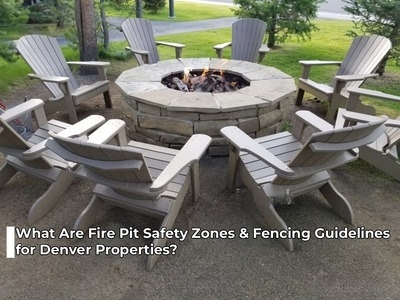
Fire pit installations are becoming one of the most requested additions to residential outdoor spaces across the Denver metro. As more homeowners look to pair fire features with paver patios and full patio installation projects, questions around safe placement, fencing proximity, and local code compliance are coming up earlier in the planning conversation.
Denver Patio Masters, a licensed outdoor living contractor based in Centennial, Colorado, has addressed those concerns directly in a resource titled “What Are Fire Pit Safety Zones & Fencing Guidelines for Denver Properties?” so homeowners can plan with confidence before a single stone is placed.
What Fire Pit Safety Zones Actually Mean for Denver Homeowners
A fire pit safety zone is a defined area of clear, non-combustible space required around a fire feature on all sides. For built-in fire pits integrated into paver patios or concrete patio installation projects, fire safety guidelines and most local codes call for a minimum of 10 feet of clearance in every direction from fencing, overhead structures, buildings, and combustible materials.
The purpose of that clearance is straightforward: to prevent fire from spreading to a fence line, a patio cover, a pergola, or any nearby structure that could catch a spark. Colorado’s dry summer conditions and afternoon wind patterns make that 10-foot buffer worth treating as a practical safety standard, not just a line in a code book. Embers travel farther than most people expect, and the climate here gives them every opportunity to do so.
That 10-foot figure is a baseline. City-level codes, county regulations, and HOA community design guidelines can each set different minimums or layer on additional placement restrictions that go beyond the general recommendation.
How Fencing Material Changes the Safety Calculation
Not all fencing responds the same way to heat and ember exposure. The existing material on a property directly affects how much distance is needed and how much risk is present when a fire feature is active nearby.
Wood fencing carries the highest risk at close range. Pressure-treated lumber, cedar, and pine can all catch embers, and repeated heat exposure weakens the material over time even without a visible flame. The long-term fire risk builds gradually and quietly.
Aluminum and steel fencing present a significantly lower risk at the same distance. A fence that will not catch a spark is a fundamentally different situation from one that can. For paver patios where the fence line sits close to the intended fire pit location, fencing material becomes part of the design conversation from the start, not an afterthought once the patio installation is complete.
Vinyl fencing falls in between. It will not ignite the way wood does, but prolonged heat exposure causes deformation and structural damage over time. Full clearance still applies regardless of fencing type.
HOA Guidelines Add Another Layer Across Denver Suburbs
A significant portion of Denver metro homeowners live within HOA-governed communities, and fire features are almost always addressed in those communities’ design guidelines. In suburbs like Highlands Ranch, Centennial, Parker, and Lone Tree, HOA restrictions frequently require gas-only fire features, clearance minimums that exceed the general 10-foot standard, and material or color restrictions for the visible surround.
Denver Patio Masters manages all HOA submissions and approvals on behalf of clients. The team is familiar with HOA review processes across the Denver metro and prepares project submissions that move through the approval process without unnecessary delays. Homeowners with active patio installation projects do not need to manage that paperwork on their own.
Gas Versus Wood-Burning: Placement Considerations Differ
Both gas and wood-burning fire pits can be built safely when clearances and construction standards are followed correctly. The distinction matters most when the available space is limited or when HOA approval is part of the process.
Gas fire features eliminate the ember and spark exposure associated with open wood fires. For paver patios with tighter layouts, close fence lines, or HOA restrictions on open burning, gas is typically the more practical and approval-friendly path. Wood-burning installations remain a strong option for larger backyards where the full safety clearance can be easily maintained on all sides, and the HOA permits open-fire features.
The base and surrounding materials also factor into the safety picture. Concrete and pavers are the standard choice for the surface directly beneath and around a fire feature. Grass, mulch, and bark carry combustion risk and belong well outside the safety zone.
What Sets Denver Patio Masters Apart in Fire Pit and Patio Installation
Denver Patio Masters has been building custom fire pit areas alongside full paver patios and patio installation projects across the Denver metro and Colorado Springs for years. Every completed project is backed by a lifetime warranty, making Denver Patio Masters the only patio contractor in the Denver area offering that level of coverage. If the work fails, the team returns and fixes it.
The company holds a 4.8-star rating on Google based on 194 verified reviews. Denver Patio Masters was named Best Outdoor Living Contractor in Denver Metro for 2025 by Best Of Best Reviews and ranked No. 566 on the Inc. 5000 list of fastest-growing private companies in America in 2024. Owner Marty Toma is a member of the Forbes Business Council, an invitation-only organization for recognized business leaders.
Beyond fire pit installations, Denver Patio Masters builds complete outdoor living spaces, including paver patios, concrete surfaces, pergolas, patio covers, outdoor kitchens, and retaining walls for sloped yards. One team handles the full project from design through final walkthrough.
Contact Denver Patio Masters to Start the Planning Process
Denver Patio Masters is located at 8200 S Quebec St, Suite A3703, Centennial, CO 80112. The office can be reached at (720) 626-4010 or by email at [email protected]. Office hours run Monday through Sunday, 9:00 AM to 5:00 PM. Free consultations are available to homeowners across the Denver metro area who are ready to move forward with a fire pit, paver patios, or a full patio installation.
Media Contact
Company Name: Denver Patio Masters
Contact Person: Marty
Email: Send Email
Phone: (720) 626-4010
Address:8200 S Quebec St Suite A3703
City: Centennial
State: Colorado 80112
Country: United States
Website: https://denverpatiomasters.com/


